

In the new world of the digital age, where information is basically power, there is no doubt that data privacy is an imperative for all companies. Protecting personal, behavioural and business data is no longer just a legal issue, but an ethical responsibility and a commitment to your community. After all, highly valued data originates through the private behaviour of your consumers, and in that sense, data must be understood as their native property and cared for as such.
From a business perspective, we can’t help but confirm that a company that implements a robust privacy program has a clear competitive advantage. After all, who doesn’t feel more at ease knowing that their data is truly protected?
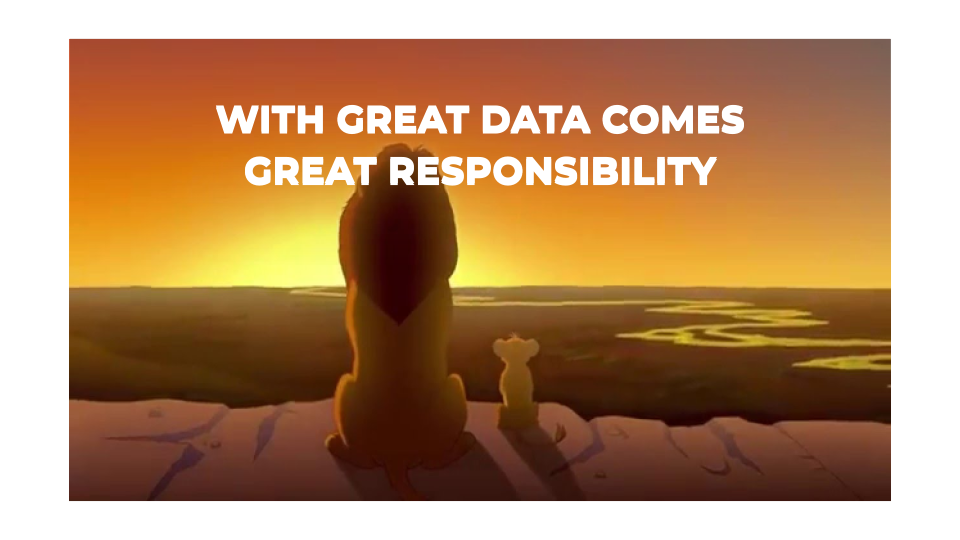
True ethical data management ensures that a company conducts its business in accordance with the regulations, standards and ethical practices established by laws such as GDPR in Europe and HIPAA in the USA, among others. These types of laws establish the principles of fair treatment that must be respected. Now, what happens when that misuse is accidental? And let’s be honest, accidents happen. This is where the need arises to generate a Data Privacy Management system that guarantees the security of your clients’ privacy and its correct storage.
What is Data Privacy Management?
Data Privacy Management refers to the process of implementing a framework or privacy frameworks with the objective of guaranteeing the individual rights of customers in relation to their privacy. This involves generating a system that provides them with the ability to manage their personal data and, at the same time, ensuring that the organization complies with current regulations.
Currently, there are two clear and complementary approaches to working with a Data Privacy framework: system and partners. These two approaches are critical when it comes to guaranteeing customers comprehensive protection of their data privacy. It is important to break with the belief that the mere implementation of a security system and manual procedures are enough to guarantee protection. Today, with the exponential growth of information and its production, a merely manual data privacy program leaves the organization exposed to the likelihood of poor management and a high threat of cyber-attacks.
In a society where data are the diamonds of the new era, it is essential to start automating processes to increase security efficiency, and do not forget that employees play a crucial role in the effective implementation of these privacy systems, so it is necessary to train them to minimize human error.
How do we move from theory to practice?
Although the exact definition of a framework must be adapted to the business reality of each entity, there are certain key dimensions that must be covered. A possible Data Privacy Management framework could be shaped as follows:

- Data mapping: aims to identify and classify existing data in the organization, understanding where and how it is stored or processed.
- Data minimization: it is crucial to operate with the minimum amount of personal data necessary to limit the processing of sensitive data to a minimum by defining data retention policies.
- Consent management: it is necessary to obtain explicit and informed consent, and to ensure that documentation of such consents are properly collected and stored.
- Data security: relates to the company’s obligation to protect data from potential threats through the implementation of tools or systems against unauthorized access and data breaches.
- Transparency: it is crucial to establish clear policies and procedures to respond to access requests from customers by providing clear communication about privacy practices.
Why implement a Data Privacy program?
Poor data management can lead to loss of reputation and customers, and in most cases, legal consequences. It is essential for companies to respond to their ethical obligations in the management of their data by adopting a proactive approach rather than simply following the law. To carry out these initiatives, Keepler generates Data Privacy programs that help minimize the risk of misuse and avoid unnecessary accidents.
A properly implemented Data Privacy program allows establishing a strong culture of ethical management through a clear framework of action. This includes a status assessment, counseling, training and constant supervision to ensure expected behaviors around privacy, and, not least, support for employees in case unethical practices want to arise.
Focusing on ethical data management not only increases transparency within the organization, but also improves the relationship with all its stakeholders. At Keepler, we understand the importance of privacy and ethics in the management of your data. Our commitment to responsible management not only complies with legal requirements, but also reflects our respect for the dignity and rights of individuals, ensuring trust and sustainability in the business.
Image: Unsplash | Towfiqu barbhuiya

Data Management Associate at Keepler. "I'm an innovation enthusiast that helps companies govern their data and digital transformation. I love learning by doing and not afraid of new challenges. For me, the sky is not the limit."


0 Comments